
Allstate Home Insurance Quote: A 2025 Buyer’s Guide for Homeowners
Securing the right protection for your home is one of the most important financial decisions you’ll make. The process of getting an Allstate home insurance quote can feel overwhelming, with dozens of factors influencing your final premium. This guide is designed to demystify the process, helping you understand what goes into your quote, how to find savings, and what to expect from an Allstate policy.
Whether you’re a first-time homebuyer or looking to switch providers, understanding the details of your coverage is crucial. We’ll break down everything from standard protections and optional add-ons to the claims process, giving you the confidence to choose a policy that truly fits your needs and budget. This isn’t just about finding the cheapest price; it’s about finding the right value to protect your biggest asset.
What to Know
- Quotes Are Highly Personalized: Your Allstate home insurance quote depends on many unique factors, including your home’s location, age, construction materials, your claims history, and even your credit score.
- Discounts Are Key to Savings: Allstate offers numerous discounts that can significantly lower your premium. Bundling auto and home policies, installing security systems, and being claim-free are some of the most effective ways to save.
- Coverage Isn’t One-Size-Fits-All: A standard policy covers your dwelling, personal belongings, and liability, but common perils like floods and earthquakes require separate, specialized coverage.
- Understanding Exclusions is Crucial: Knowing what your policy doesn’t cover is just as important as knowing what it does. Routine wear and tear, pest infestations, and certain natural disasters are typically excluded.
- The Claims Process Matters: Your experience with an insurer is often defined by its claims process. Allstate offers multiple ways to file a claim, including a mobile app, but customer satisfaction ratings can vary.
The Fundamentals of Homeowners Insurance
Before diving into the specifics of an Allstate insurance estimate, it’s essential to understand the basic components of a standard homeowners policy, often called an HO-3 policy. This foundational knowledge helps you compare quotes accurately and ensure you’re not underinsured. A typical policy is a package of several distinct coverage types designed to protect you from different kinds of financial loss.
First is Dwelling Coverage (Coverage A). This is the core of your policy, protecting the physical structure of your house—the roof, walls, foundation, and attached structures like a garage. The amount of dwelling coverage you need should be enough to completely rebuild your home from the ground up in the event of a total loss, which isn’t the same as its market value.
Next comes Other Structures Coverage (Coverage B), which protects structures on your property that aren’t attached to your house, like a detached garage, shed, or fence. This is usually set at 10% of your dwelling coverage. Personal Property Coverage (Coverage C) insures your belongings inside the home, such as furniture, electronics, and clothing. This is typically calculated as 50% to 70% of your dwelling coverage.
Finally, Loss of Use Coverage (Coverage D) helps with temporary living expenses, like hotel bills and restaurant meals, if your home becomes uninhabitable due to a covered event.
Beyond protecting your property, home insurance also includes liability protection. Personal Liability Coverage (Coverage E) protects you financially if someone is injured on your property and you are found legally responsible. It can cover their medical bills and your legal defense costs. Medical Payments to Others (Coverage F) provides a smaller amount of coverage for minor injuries to guests on your property, regardless of who is at fault.
Decoding Your Allstate Home Insurance Quote: Key Factors at Play
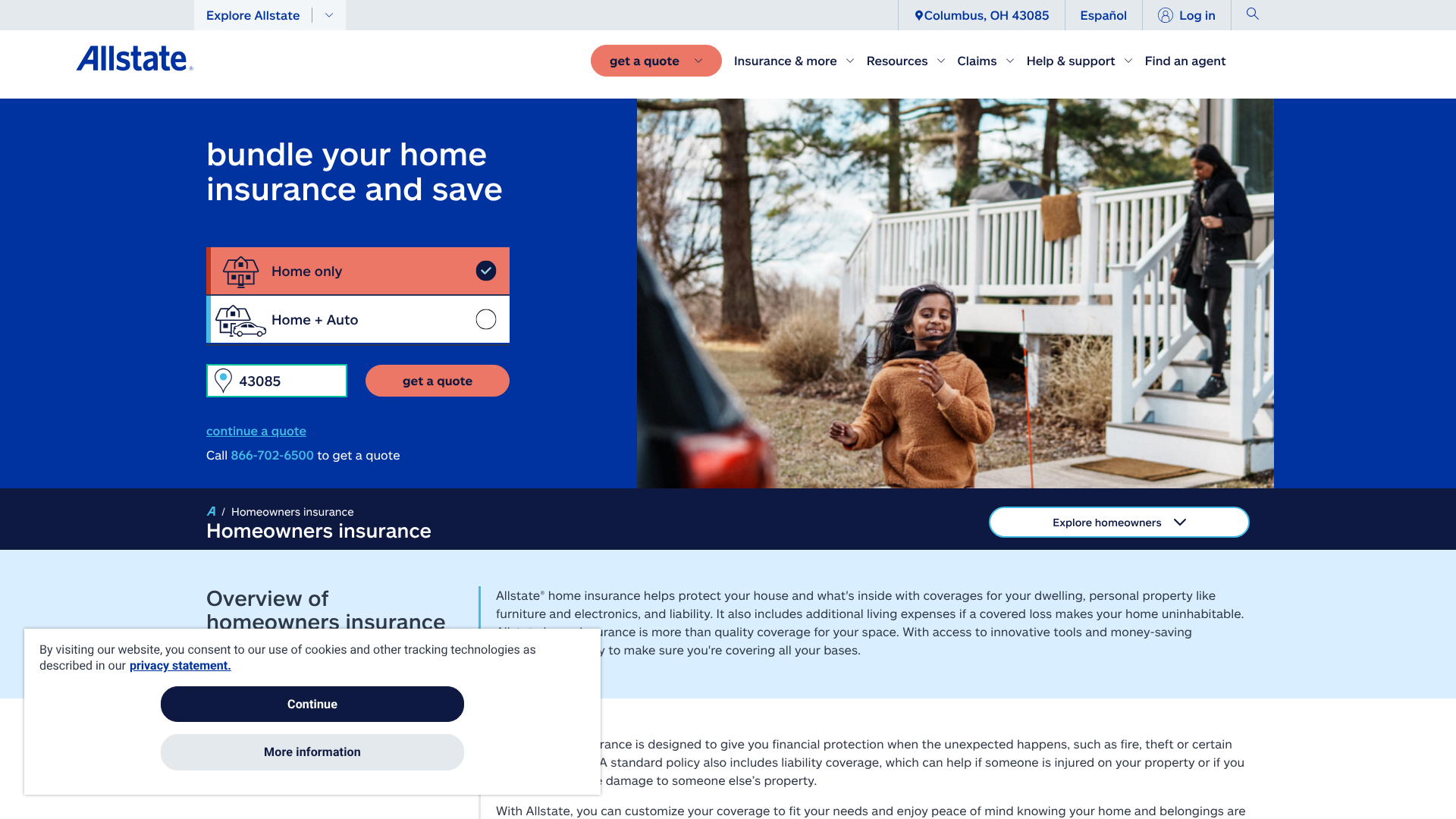
When you request a home insurance quote from Allstate, the company’s algorithm analyzes dozens of data points to assess your risk profile and calculate your premium. Understanding these factors empowers you to take steps that could lead to a more favorable rate. Some of these elements are within your control, while others are not.
Location and Environmental Risks: Where your home is located is one of the biggest drivers of cost. If you live in an area prone to hurricanes, wildfires, tornadoes, or hailstorms, you can expect to pay more. Proximity to a fire station and fire hydrants can work in your favor, while living in a high-crime neighborhood can increase your rates.
Home Characteristics: The age, size, and construction of your home play a significant role. Newer homes built with modern, fire-resistant materials often receive better rates. Masonry or brick homes are generally cheaper to insure than wood-frame homes. The age and condition of your roof are also critical; an older roof is more likely to fail, leading to higher premiums or even denial of coverage.
Your Personal Claims History: If you’ve filed multiple home insurance claims in the past, especially in the last three to five years, insurers will view you as a higher risk. A history of frequent claims suggests a higher likelihood of future claims, leading to a more expensive Allstate insurance estimate. Maintaining a claim-free record is a powerful way to keep costs down.
Credit-Based Insurance Score: In most states, insurers use a credit-based insurance score to help predict the likelihood of you filing a claim. This score is different from your regular credit score but is derived from your credit history. A higher score, indicating responsible financial management, often translates to lower insurance premiums. You can monitor your credit profile using services like Credit Karma or get a detailed look at the score lenders see with myFICO to ensure there are no errors dragging your score down.
Protective Devices and Safety Features: Allstate offers discounts for homes equipped with safety and security features. This includes smoke detectors, fire extinguishers, deadbolt locks, burglar alarms, and sprinkler systems. A centrally monitored security system that alerts the police or fire department can provide one of the most substantial discounts.
A Step-by-Step Guide to Getting an Accurate Home Insurance Quote from Allstate
Getting an accurate quote requires providing detailed and correct information. Rushing through the process or guessing at answers can result in a premium that is either too high or, worse, based on incorrect information that could jeopardize a future claim. Follow these steps to ensure your home insurance quote from Allstate reflects your true needs.
- Gather Your Information: Before you start, collect all the necessary details about your property and personal history. This includes:
- Your property address.
- The year your home was built and the square footage.
- Information about construction materials (e.g., brick, vinyl, wood siding).
- The year your roof was last replaced and its material (e.g., asphalt shingle, metal).
- Details about updates to major systems like plumbing, electrical, and heating.
- Information about safety features like smoke detectors and security systems.
- Your insurance and claims history for the past five years.
- Choose Your Quote Method: Allstate offers a few ways to get a quote. You can use their online quote tool, which is fast and convenient for a preliminary estimate. Alternatively, you can call their national hotline or contact a local Allstate agent. Speaking with an agent is often the best way to get the most accurate and customized quote, as they can help you identify all eligible discounts and tailor coverage options.
- Provide Accurate Details: As you fill out the online form or speak with an agent, be as precise as possible. Estimate the value of your personal belongings to ensure you have adequate Coverage C. If you have high-value items like jewelry, art, or collectibles, mention them, as they may require a special endorsement or rider for full protection.
- Review and Customize Your Coverage: The initial quote you receive is a starting point. Review the proposed coverage limits and deductibles. Consider if you need higher liability limits or want to add optional coverages. This is the time to ask questions and adjust the policy to fit your risk tolerance and budget.
Pro Tip: Don’t just focus on the lowest premium. A cheaper policy might have a very high deductible or insufficient coverage limits. Pay close attention to the dwelling coverage amount to ensure it’s enough to fully rebuild your home, not just cover its market value.
Understanding Allstate’s Coverage Options

While a standard HO-3 policy provides a robust foundation, Allstate offers a variety of endorsements (or add-ons) that allow you to customize your policy for more comprehensive protection. Understanding these options is key to building a safety net that addresses your specific risks.
Standard Coverages: As discussed, your base Allstate home insurance policy will include dwelling, other structures, personal property, loss of use, personal liability, and medical payments coverage. For personal property, Allstate typically provides actual cash value (ACV) reimbursement, which pays for the depreciated value of your items. You can often upgrade to replacement cost value (RCV), which pays the full cost to replace the item with a new one.
Optional Endorsements:
- Scheduled Personal Property: If you own high-value items like engagement rings, fine art, or expensive electronics, standard policy limits might not be enough. This endorsement provides specific, higher coverage for listed items. * Water Backup: This is a crucial add-on that is not included in a standard policy. It covers damage caused by a backed-up sewer or drain, which can be a costly and unpleasant event.
- Identity Theft Restoration: In an increasingly digital world, identity theft is a growing concern. This coverage helps with the costs associated with restoring your identity, such as legal fees and lost wages. Services like IdentityIQ can also provide proactive monitoring to help prevent theft in the first place. * Yard and Garden: This endorsement increases coverage for trees, shrubs, and landscaping, which have limited protection under a standard policy.
- Business Property: If you run a business from home, this add-on provides additional coverage for business-related equipment and inventory stored on your property.
It’s also important to know what is not covered. Perils like floods, earthquakes, sinkholes, and landslides are almost always excluded from standard policies. If you live in an area at risk for these events, you will need to purchase separate, specialized insurance policies.
Unlocking Savings: Allstate Home Insurance Discounts
One of the most effective ways to manage the cost of your Allstate home insurance is by taking advantage of the many discounts they offer. When getting a quote, make sure to ask about every discount for which you might be eligible. Combining several of these can lead to substantial savings on your annual premium.
Multi-Policy Discount (Bundling): This is often the largest discount available. By bundling your home and auto insurance policies with Allstate, you can save a significant percentage on both premiums. It also simplifies your insurance management by having both policies with one carrier.
Protective Device Discount: As mentioned earlier, installing and maintaining safety equipment makes your home less risky to insure. This includes discounts for smoke detectors, fire alarms, burglar alarms (especially centrally monitored ones), and automatic sprinkler systems.
Early Signing Discount: If you get a quote and sign up for a new policy at least seven days before your current policy expires, Allstate may offer you a discount for planning ahead.
Claim-Free Discount: Homeowners who have not filed a claim for a certain period (typically five years) are rewarded with lower rates. This discount recognizes your history as a low-risk policyholder.
New Home Discount: If your home was recently built, you’re likely to receive a discount. Newer homes have modern electrical, plumbing, and structural components that are less likely to cause problems.
Automatic Payment Discount: Setting up automatic payments from your bank account can earn you a small discount. This helps the insurer reduce administrative costs and ensures you never miss a payment.
Loyalty Discount: Allstate often rewards long-term customers. The longer you stay with the company, the more you may save on your policy.
Allstate vs. The Competition: A Comparative Look

Allstate is one of the largest insurance carriers in the United States, but it’s far from the only option. When you get a home insurance quote from Allstate, it’s wise to compare it with quotes from other top-rated providers to ensure you’re getting the best combination of price, coverage, and service. Here’s a brief look at how Allstate stacks up against major competitors like State Farm and GEICO.
| Feature | Allstate | State Farm | GEICO |
|---|---|---|---|
| Market Share | One of the largest national insurers | The largest U.S. home insurer | Large national insurer, policies underwritten by partners |
| Agent Network | Strong network of local agents | Extensive network of exclusive local agents | Primarily direct-to-consumer online and by phone |
| Digital Tools | Robust website and mobile app | Highly-rated mobile app and online tools | Strong online presence and user-friendly tools |
| Discounts | Wide range of discounts, strong bundling | Numerous discounts, strong loyalty and bundling | Good selection of discounts, often competitive pricing |
| Customer Service | Mixed; ratings vary by region | Generally above-average customer satisfaction | Ratings depend on the underwriting partner |
Allstate vs. State Farm: Both companies rely heavily on a local agent model, which appeals to customers who prefer personalized, in-person service. State Farm is the market leader and generally receives slightly higher customer satisfaction scores in J.D. Power studies.
However, pricing is highly individual, so one may be significantly cheaper than the other for your specific profile.
Allstate vs. GEICO: GEICO operates primarily as a direct-to-consumer company, which can sometimes lead to lower overhead and more competitive pricing. However, GEICO doesn’t underwrite its own home insurance policies; it partners with other insurers. This means your actual policy and claims experience will be with a third-party company, which can lead to inconsistencies in service.
Allstate, by contrast, manages its own policies and claims.
Ultimately, the best company for you depends on your priorities. If you value a local agent relationship, Allstate and State Farm are strong contenders. If you prioritize a streamlined digital experience and potentially lower costs, GEICO is worth a look. The only way to know for sure is to get a home insurance quote from Allstate and at least two other competitors.
What’s Not Covered? Common Exclusions in an Allstate Policy
An insurance policy is a legal contract, and its power lies in the details. One of the most critical sections to understand is the list of exclusions—the perils and circumstances that your policy will not cover. Misunderstanding these can lead to a denied claim and significant out-of-pocket expenses.
Flood Damage: This is the most common and misunderstood exclusion. No standard home insurance policy, including Allstate’s, covers damage from flooding caused by overflowing rivers, storm surges, or heavy rainfall. To be protected, you must purchase a separate flood insurance policy, typically through the National Flood Insurance Program (NFIP) or a private insurer. You can check your flood risk at the official FEMA Flood Map Service Center.
Earth Movement: Damage from earthquakes, landslides, mudflows, and sinkholes is also excluded. If you live in a seismically active area like California or a region prone to sinkholes like Florida, you will need to buy a separate earthquake or sinkhole endorsement.
Maintenance Issues and Wear and Tear: Home insurance is designed to cover sudden and accidental damage, not problems that arise from neglect or old age. A leaky faucet that slowly rots the cabinet below, a roof that fails due to age, or a pest infestation (like termites) are all considered maintenance issues and are not covered.
Ordinance or Law: If your home is damaged and you must rebuild, local building codes may have changed since your home was first constructed. Your standard policy may not cover the extra cost to bring your home up to the new code. You can often purchase an Ordinance or Law endorsement to cover these additional expenses.
Other common exclusions include damage from nuclear hazards, acts of war, and intentional damage caused by the homeowner.
Proactive Ways to Lower Your Allstate Insurance Premium
While some factors that influence your premium are out of your control, there are several proactive steps you can take to make your profile more attractive to insurers and potentially lower your Allstate home insurance quote.
- Increase Your Deductible: The deductible is the amount you pay out of pocket before your insurance coverage kicks in. Opting for a higher deductible—say, increasing it from $1,000 to $2,500—can lower your annual premium significantly. Just be sure you have enough in savings to comfortably cover the higher amount if you need to file a claim.
- Improve Your Home’s Security and Safety: As mentioned, installing a centrally monitored security system, modern smoke detectors, and deadbolt locks can earn you discounts. You can also take steps to mitigate risks, such as trimming trees away from your roof or upgrading old wiring.
- Maintain a Good Credit Score: A strong credit history can lead to a better insurance score and lower premiums. Pay your bills on time, keep credit card balances low, and avoid opening unnecessary new lines of credit. Regularly checking your credit report for errors is also a smart move.
- Review Your Coverage Annually: Don’t just set and forget your policy. Review your coverage with your agent once a year to ensure it still meets your needs. If you’ve gotten rid of expensive personal items or the cost to rebuild in your area has changed, you may be able to adjust your coverage limits and save money.
The Allstate Claims Process: What to Expect When You Need It Most
Your relationship with an insurance company is truly tested when you need to file a claim. Allstate has modernized its claims process to offer multiple convenient options for policyholders.
Filing a Claim: You can report a claim 24/7 in several ways. The Allstate mobile app is one of the easiest methods, allowing you to start a claim and upload photos directly from your phone. You can also file online through your Allstate account or by calling the national claims hotline. If you have a local agent, they can also guide you through the process.
The Process:
- Initial Report: Once you file the claim, you will be assigned a claim number and a dedicated Allstate claims professional. 2. Damage Assessment: An adjuster will contact you to schedule an inspection of the damage.
This may be done in person or virtually, where you use your phone’s camera to show the adjuster the damage in real-time. 3. Review and Estimate: The adjuster will evaluate the damage, review your policy coverage, and create an estimate for the cost of repairs. 4.
Settlement: Once the estimate is approved, Allstate will issue a payment. The payment may be sent directly to you, your contractor, or your mortgage lender, depending on the circumstances and the size of the claim.
Allstate’s Digital Locker feature is a helpful tool that allows you to create a digital inventory of your personal belongings, which can dramatically speed up the personal property portion of a claim. Taking the time to document your possessions with photos and receipts before a disaster strikes is a highly recommended step.
What Do Customers Say? Allstate Reviews and Ratings
When choosing an insurer, it’s wise to look beyond marketing materials and consider third-party ratings and real customer feedback. Allstate’s reputation is generally solid, but experiences can vary.
Financial Strength: Allstate consistently receives high marks for financial strength from agencies like AM Best, which gives it an A+ (Superior) rating. This indicates that the company has a strong ability to pay out claims, even in the event of a large-scale disaster.
Customer Satisfaction: Customer satisfaction ratings are more of a mixed bag. In the J.D. Power 2023 U.S. Home Insurance Study, Allstate’s scores were often near the industry average, but they varied significantly by region.
Some regions scored above average, while others fell below. This highlights the importance of the local agent and regional claims adjusters in shaping the customer experience.
Customer Perspectives: Online forums provide unfiltered feedback. For example, a discussion on Reddit offers a glimpse into the trade-offs some customers perceive. One user in a Reddit thread noted that while their quote was low, they were concerned about the claims process, stating, “Low premiums are nice, but the catch is that Allstate is awful. They will pay you as little as they can and make you fight to earn a penny more.” This sentiment is not universal, but it underscores the importance of researching an insurer’s claims reputation, not just their prices.
How to Compare Homeowners Insurance Quotes from Allstate
Here’s a video from Allstate that provides some helpful tips on how to effectively compare quotes from different providers.
FAQ: Answering Your Questions About Allstate Home Insurance
Here are answers to some of the most common questions homeowners have when considering an Allstate policy.
Is Allstate dropping homeowners insurance?
Allstate, like many other major insurers, has been adjusting its risk exposure in certain high-risk states. In recent years, they have stopped writing new policies in some areas prone to catastrophic events like wildfires in California or hurricanes in Florida. This is not a nationwide withdrawal but a strategic, regional decision to manage financial risk. If you are an existing customer in these areas, your policy may still be renewed, but it’s essential to check with a local agent for the most current information.
Who is the cheapest insurance company for homeowners insurance?
There is no single “cheapest” company for every person. The cost of home insurance is so highly personalized that the cheapest provider for your neighbor could be the most expensive for you. Factors like your home’s age, location, your credit score, and your claims history all play a role. The only way to find the cheapest option for your specific situation is to get quotes from multiple companies, including Allstate, State Farm, Progressive, and smaller regional insurers.
Why is Allstate home insurance so expensive?
If you receive a quote from Allstate that seems high, it could be due to several factors. You might live in a high-risk area, your home may have older features (like an old roof), or you may have a history of claims. Allstate also invests heavily in its local agent network and marketing, and those operational costs can be reflected in premiums. However, they also offer many discounts, so working with an agent to ensure you’re receiving all eligible credits can help lower the cost.
Who is cheaper, Allstate or Geico?
Comparing Allstate and Geico on price can be tricky. Geico often appears cheaper in initial quotes because of its direct-to-consumer model, which has lower overhead. However, Geico doesn’t underwrite its own home policies; it partners with other companies. This means the final price and service quality depend on the partner company.
Allstate’s price might seem higher at first, but it could be more competitive after applying bundling and other discounts, and you’ll be dealing directly with Allstate for service and claims.
What is the 80% rule in home insurance?
The 80% rule is a common clause in home insurance policies. It states that to be fully reimbursed for a partial loss (like a kitchen fire), you must insure your home for at least 80% of its total replacement cost. If your coverage falls below this threshold, the insurance company may only pay a portion of your claim, leaving you to cover the rest. It’s crucial to insure your home for 100% of its replacement cost to avoid this issue.
Is Allstate home insurance good or bad?
Allstate is a reputable and financially stable insurance company with a long history. It offers a wide range of coverage options and discounts, and its local agent network is a significant benefit for those who prefer personal service. However, its customer satisfaction ratings can be average, and some customers report issues with the claims process. Whether it’s “good” or “bad” is subjective and depends on what you value most: price, service, or coverage options.
Final Thoughts
Choosing the right home insurance policy is a critical step in protecting your financial well-being. Getting an Allstate home insurance quote is a great starting point, as the company is a major player with a comprehensive suite of products and a large agent network to provide personalized advice. However, the key to finding the best value is to be an informed and proactive shopper.
Remember to gather accurate information, explore all available discounts, and carefully consider the coverage limits and deductibles that make sense for your situation. Don’t be afraid to ask questions and customize your policy with endorsements that cover your unique risks. Most importantly, compare your Allstate quote with offers from at least two other reputable insurers to ensure you’re securing the best possible protection at a competitive price.
By investing a little time in research and comparison, you can gain peace of mind knowing that your home and family are protected by a policy that truly fits your needs. Your home is more than just a building; it’s the center of your life, and it deserves to be properly insured.